




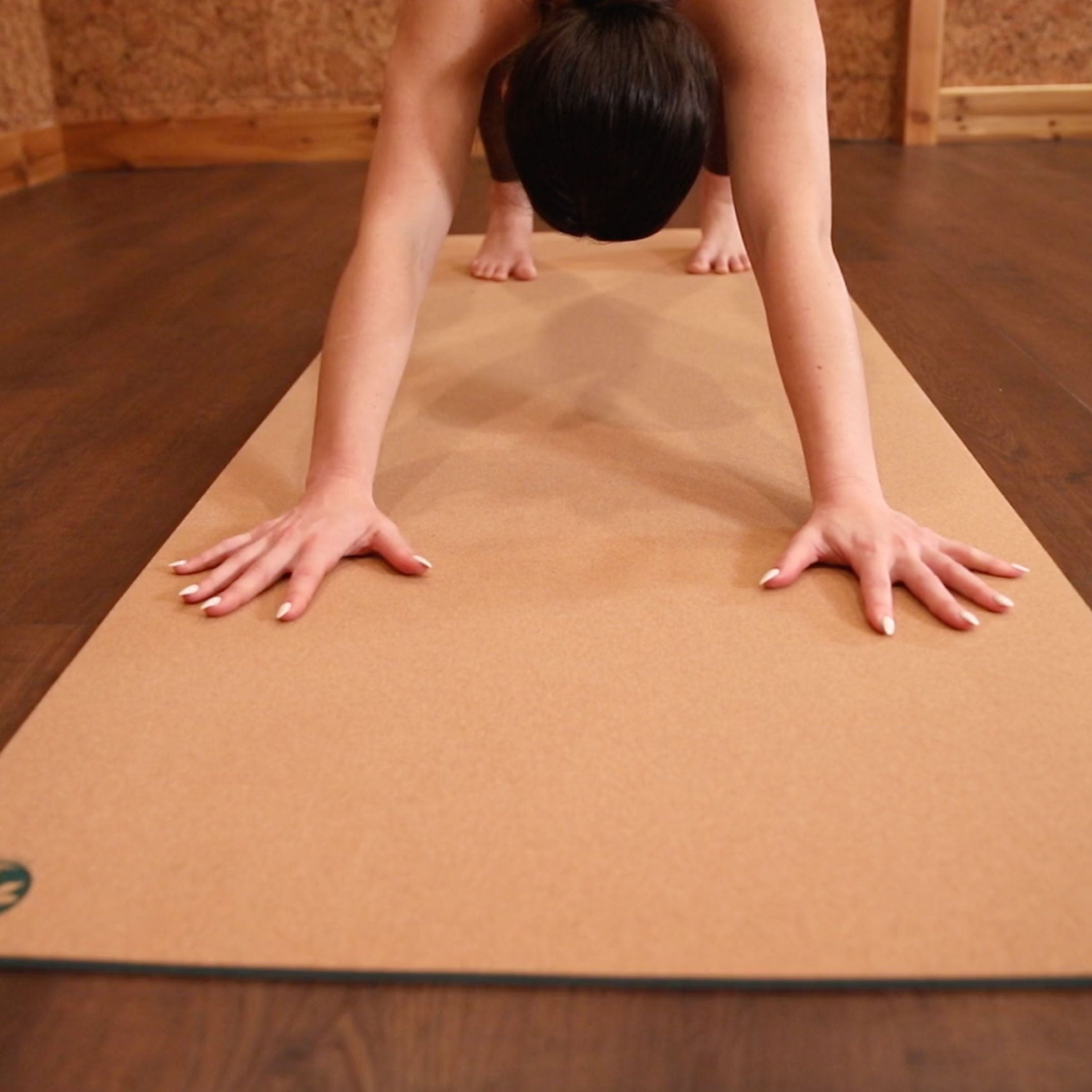







Your yoga mat is the foundation of your practice. You stand on it, breathe on it, and press your palms into it several times a week. So it makes sense to ask what it’s made of and where it ends up once you’re done with it.
Most conventional yoga mats are made from PVC. Cork mats are a strong natural alternative. Here’s how the two compare.
What’s Wrong With PVC Mats?
PVC (polyvinyl chloride) is one of the most environmentally problematic plastics in use. It’s made from fossil fuels and chlorine, and making it can release harmful byproducts, including dioxins. To make PVC soft and flexible enough for a yoga mat, manufacturers often add plasticizers. Historically these have included phthalates, which have raised health concerns.
The bigger problem is what happens afterward. PVC mats don’t biodegrade, and they’re rarely accepted by recycling programs. A worn-out PVC mat almost always goes to landfill, where it can sit for centuries. It’s cheap to buy and costly to throw away.
Why Cork Is Different
It’s renewable. Cork comes from the bark of the cork oak tree. The tree is never cut down. Its bark is hand-harvested roughly every nine years, and the tree regrows it. A single cork oak can be harvested many times over a lifespan of 200 years or more.
It supports healthy forests. Mediterranean cork forests are rich in biodiversity and store significant amounts of carbon. Demand for cork gives landowners a reason to keep these forests standing.
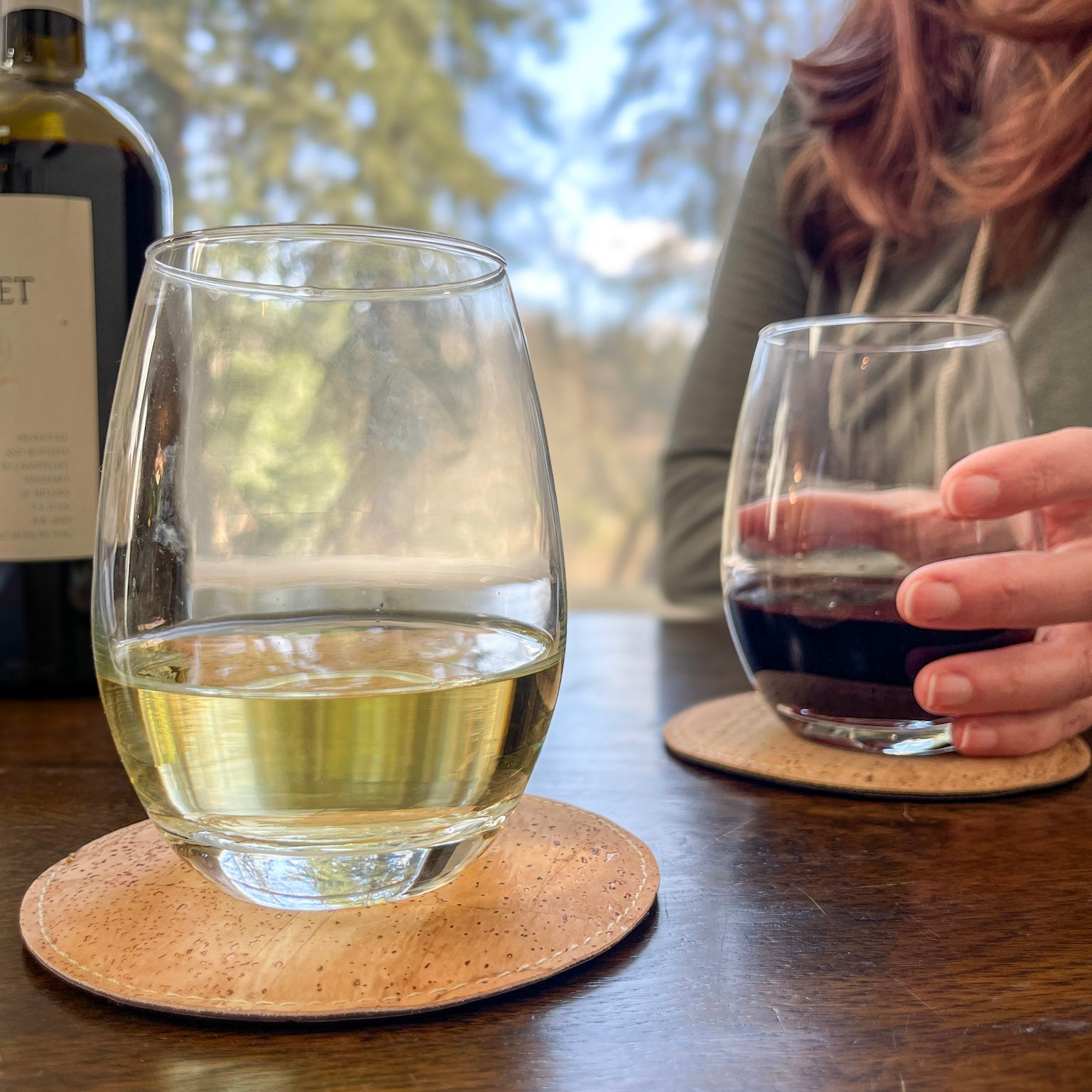
It’s naturally antimicrobial. Cork contains suberin, a waxy compound that helps it resist bacteria, mould, and odour. That’s a real advantage for something you sweat on.
It grips better when you sweat. Most mats get slippery as you sweat, but cork gets grippier when it’s slightly damp. That makes it a favourite for hot yoga and flowing vinyasa practices.
It’s plant-based and biodegradable. Cork is 100% plant material, so it fits naturally into a vegan lifestyle and breaks down far more readily than any plastic.

Cork vs PVC at a Glance
PVC mats are fossil-fuel based, may contain plasticizers, are hard to recycle, and can get slippery with sweat. Cork mats are renewable, naturally antimicrobial, biodegradable, and offer better grip the more you move. PVC usually costs less up front. Cork is the better long-term investment for your practice and the planet.
What to Look for When Buying a Cork Mat
The backing matters as much as the surface. Choose cork mats backed with natural tree rubber or TPE rather than PVC. Otherwise you’re just putting a cork face on a plastic mat. If you have a latex allergy, choose TPE. Look for brands that say what adhesives they use, and keep your mat out of direct sunlight to keep it in good condition.

Care Tips
Wipe your cork mat with a damp cloth after practice, and let it air-dry flat or rolled cork-side out. Skip harsh chemical cleaners and essential-oil sprays, which can dry out the cork. A little water is usually all it needs.

The Bottom Line
Switching from PVC to cork is one of the simplest ways to bring your values onto the mat. You get better grip, a cleaner surface, and a product that comes from living trees instead of fossil fuels.
[Shop sustainable cork yoga mats at veganist.com


Leave a comment